Nearly 40 million people live in California, the nation’s most populous state. Every four years, Californians elect nine statewide officials to manage their state’s government. Today, The Californian is recommending who should be elected to be governor, lieutenant governor, attorney general, secretary of state, treasurer, controller, insurance commissioner, Board of Equalization member and superintendent of public instruction.
The Californian’s recommendations are based on candidates’ experience, qualifications and public service records. Voters are encouraged to also do their own research. The two candidates competing for each statewide office in the Nov. 3 election received the most votes in the June primary.
Xavier Becerra
GOVERNOR
Democrat Xavier Becerra has the experience, public service record and demonstrated management skills to lead California. He should be elected governor.
His Republican opponent, Steve Hilton, has never held an elected office. His business experience is with a startup company and small entrepreneurial adventures. His name recognition comes primarily from his political commentaries and show-hosting on Fox News. Hilton’s political experience was in Britain, where he was a political adviser to Prime Minister David Cameron from 2010 to 2012. Hilton’s run for California governor has been endorsed by President Trump.
Born in London, Hilton moved to California in 2012, with his wife, Rachel Whetstone, a technology-industry executive. Hilton became a visiting scholar at Stanford and in 2014 co-founded the San Francisco-based startup company Crowdpac, an online political fundraising platform. He left the company in 2018. From 2017 to 2023, he hosted the Fox News show “The Next Revolution.” Hilton became a naturalized U.S. citizen in 2021.
Born in Sacramento, Becerra was the third of four children born to immigrant parents. The first member of his family to graduate from college, Becerra earned a bachelor’s degree in economics and a law degree from Stanford University.
He practiced law and worked for state Sen. Art Torres before beginning his political career — state Assembly, 1990-1992; Congress, 1993-2017; California attorney general, 2017-2021; and U.S. Department of Health and Human Services secretary, 2021-2025.
As California AG, Becerra managed the state’s top law enforcement agency, with a staff of about 5,400 and a budget of more than $1 billion. He managed more than 80,000 employees as HHS secretary.
Becerra has demonstrated that he has the experience and abilities to give California the leadership it needs in these challenging times.
Candidate websites:
•••
Gloria Romero
LIEUTENANT GOVERNOR
The lieutenant governor’s main responsibility is to lead California when the governor is temporarily, or permanently, unable to serve. The lieutenant governor also presides over the state Senate, breaking tie votes; is a member of the UC Board of Regents, CSU Board of Trustees, California Community Colleges Board of Governors and the state’s online Calbright College Board of Trustees; chairs the California Commission for Economic Development; and rotates with the state treasurer as chair of the State Lands Commission.
Republican Gloria Romero and Democrat Fiona Ma emerged from the June primary as the two top vote-getters to compete for lieutenant governor.
One of six children, Gloria Romero, was born in Barstow. She earned an associate degree from Barstow Community College; bachelor’s and master’s degrees from Cal State Long Beach; and a doctorate degree in psychology from UC Riverside. She is psychology professor emeritus at Cal State Los Angeles and is an adjunct professor at Pepperdine University’s School of Public Policy.
Romero’s elected political career was as a Democrat. She served in the state Assembly from 1998 to 2001, and in the state Senate from 2001 to 2010, when she was term-limited out of office. As a Democratic senator, she assumed leadership positions and was the first woman to serve as Senate Majority Leader. But during her tenure, she increasingly locked horns with her party colleagues over education reforms and parental rights.
After an unsuccessful 2010 campaign for state superintendent of public instruction, Romero focused her energy on education reforms. In 2024, she announced her views no longer aligned with the Democratic Party. She reregistered as a Republican and endorsed President Trump’s reelection.
Fiona Ma was born in New York City of Chinese immigrant parents. She grew up on Long Island and earned a bachelor’s degree in accounting from Rochester Institute of Technology, New York. She moved to California after college and earned a master’s in taxation from Golden Gate University; and a master’s in business administration from Pepperdine University. She is a licensed CPA.
Her professional career began with a large accounting firm. In 1994, she opened her own firm and worked part time helping state Sen. John Burton’s constituents. She was elected to the San Francisco Board of Supervisors in 2002 and then to the state Assembly, where she served until 2012. Ma served as Assembly Majority Whip and Speaker pro Tempore. In 2015, she was elected to the California Board of Equalization. With her 2019 election, she assumed her present office as state treasurer. Her office handles about $3 trillion in transactions annually, oversees the state’s investments and serves as the state’s bond-finance agent.
Her tenure as treasurer experienced a management and judgment controversy stemming from a 2021 sexual harassment complaint filed by a female senior staffer in her office. The woman complained she believed her continued employment depended on accepting Ma’s alleged sexual advances. Ma denied the accusations, which were settled out of court with the state paying the woman $350,000 in 2024.
Voters have two capable and experienced candidates competing for lieutenant governor. Who will they trust to be the chief executive of California if the governor is unable to serve? The Californian’s answer is Gloria Romero.
Candidate websites:
•••
Rob Bonta
ATTORNEY GENERAL
The attorney general is the state’s chief legal and law enforcement official, who is primarily responsible for enforcing and defending the state’s laws.
Democrat Rob Bonta, the incumbent attorney general, and Republican attorney Michael Gates emerged from the June primary as the two top vote-getters to compete for the office on Nov. 3.
Born in the Philippines, Bonta moved to California as an infant with his family. He earned a bachelor’s degree in history and a law degree, both from Yale University. Before entering politics, he practiced law, with a private law firm and as a deputy San Francisco city attorney.
He was elected to the Alameda City Council in 2010. From 2012 to 2021, he represented an East Bay district in the state Assembly. In 2021, he was appointed by Gov. Newsom to replace Attorney General Xavier Becerra, who was named U.S. Health and Human Services secretary. In 2022, Californians elected Bonta to a four-year term. He now is running for reelection.
During his tenure, Bonta has had a high profile for his role in California’s conflicts with the federal government, as well as major litigation involving technology, entertainment, housing and consumer protection. Bonta has filed or joined in more than 50 lawsuits involving the Trump administration’s withholding of federal funds and challenges to state laws and voting rights.
Challenger Gates contends Bonta is too focused on federal litigation at the expense of crime-fighting. But Bonta responds his office has prioritized pursuing organized retail crime, fentanyl and human trafficking, firearms violations and hate crimes, as well as enforcing state housing laws and pursuing major litigation involving technology, pharmaceutical and entertainment companies, among others.
Gates grew up in Huntington Beach; earned a bachelor’s degree in business administration and management from Pepperdine University; and a law degree from Chapman University, where he joined the Federalist Society.
Gates began his legal career as a trial lawyer with a private law firm. In 2014, he was elected Huntington Beach’s city attorney and earned a reputation for challenging state laws. Based on Huntington Beach’s status as a charter city, he unsuccessfully argued the city was not obligated to abide by some state housing requirements. Using the same argument, Gates unsuccessfully challenged the state’s sanctuary status. A controversy during his nearly decade as city attorney was an age discrimination complaint filed by two attorneys in his office. Gates denied the allegations. But the city settled the lawsuit in 2021 for $2.5 million.
In February 2025, Gates left his Huntington Beach post to accept a position in Washington, D.C., as deputy assistant attorney general in the Civil Rights Division under then-U.S. Attorney General Pam Bondi. After about 10 months in the job, he said he resigned to spend more time with his family in California. However, the Orange County Register obtained a federal personnel document that appeared to say Gates had been terminated. A newspaper source alleged Gates had created a hostile work environment. Gates denied that and produced an email from the Civil Rights Division purporting that his termination had been rescinded and his personnel record would reflect that he voluntarily resigned. Gates returned to the Huntington Beach city attorney’s office as chief assistant city attorney in November 2025, but quit a few months later to campaign for California attorney general.
As an assemblyman, Bonta spent nearly a decade making state laws and now, as attorney general, he is enforcing and defending California’s laws. Bonta should continue as California’s attorney general.
Candidate websites:
•••
Shirley Weber
SECRETARY OF STATE
While administering statewide elections is the most visible function of the secretary of state office, it has many more responsibilities, including election security and voter registration; recording California’s campaign finance and lobbying disclosures; maintaining California’s state archives and historical records; and processing business and corporate filings.
Democrat Shirley Weber, the incumbent secretary of state, and Republican Don Wagner emerged from the June primary as the two top vote-getters to compete for the job.
Weber, who has held the office since 2021, is seeking reelection to a second four-year term. She was appointed by Newsom to fill the vacancy created by Alex Padilla when he became a U.S. senator. She was elected to her first full term in 2022.
Weber earned bachelor’s, master’s and doctorate degrees in speech/communications from UCLA. She spent 40 years as a professor at San Diego State University, where she helped establish the Africana Studies Department, which she chaired.
Before her appointment to the secretary of state post, she served four terms in the state Assembly, representing a San Diego area district, leading the California Legislative Black Caucus, and chairing the Assembly Elections and Redistricting Committee.
She says her family’s experience living in the segregated Jim Crow South and the racial discrimination they encountered shaped her public career and her commitment to protecting the voting rights of all citizens. Weber is California’s first Black secretary of state.
Don Wagner earned a bachelor’s in English from UCLA and a law degree from the UC College of Law, San Francisco. He founded a law firm specializing in business and real estate. From 1998 to 2010, Wagner served on the board of the South Orange County Community College District. In 2010, he was elected to the state Assembly and served six years. In 2016, he was elected mayor of Irvine and in 2019 he was elected to the Orange County Board of Supervisors, where he presently serves.
Election of California’s next secretary of state comes at a precarious time. Fueled by President Trump’s unfounded claims that his 2020 reelection was stolen by voter fraud, election officials are besieged by court challenges and the Trump administration’s efforts to exert control over elections and limit voting access.
In 2025, the U.S. Department of Justice sued Weber and California to gain access to the state’s voter registration database that includes voter names, addresses, dates of birth, driver’s licenses, partial Social Security numbers, political party affiliation and voting history. Weber resisted, arguing that releasing the information could compromise Californians’ privacy.
In January 2026, a federal judge dismissed the lawsuit, ruling the federal government exceeded its authority by demanding California’s entire voter database. The case has been combined with similar federal lawsuits filed in other states and is being appealed. At the same time, as an Orange County supervisor, Wagner urged his board colleagues to comply with the Trump administration’s request for unredacted Orange County voter records.
Just days before the June primary, the conservative Judicial Watch filed a federal lawsuit on behalf of Wagner and the American Independent Party alleging California’s failure to remove thousands of inactive voters from voting rolls violates the National Voter Registration Act. The pending lawsuit is part of a national effort to purge voter rolls.
Wagner vows to make election administration and election security a central theme of his campaign for secretary of state. Indeed, that should be a priority as long as it makes voting secure and accessible for all citizens. Reelect Shirley Weber as secretary of state.
Candidate websites:
•••
Eleni Kounalakis
TREASURER
The treasurer is essentially the state’s chief banker, investment manager and debt financing official. The office handles about $3 trillion in banking transactions annually. The treasurer sits on several boards and commissions, including the California Public Employees Retirement System, the California State Teachers Retirement System and California Housing Finance Agency Board. The treasurer chairs the Tax Credit Allocation Committee, among other financial panels.
From the June Primary, Democrat Eleni Kounalakis and Republican Jennifer Hawks emerged as the two top vote-getters to compete for the office.
Kounalakis is the current lieutenant governor. With term limits preventing her from running for reelection, she hopes to bring her extensive private and public finance experience to the Treasurer’s office.
Kounalakis was born in Sacramento. Her father, Angelo Tsakopoulos, is a Greek immigrant and prominent Sacramento real-estate developer. She earned a bachelor’s degree in 1989 from Dartmouth College and a master’s in business administration from UC Berkeley Haas School of Business. Before entering government, Kounalakis spent 18 years at AKT Development, the company founded by her father. She eventually became president.
In 2010, President Barack Obama nominated her as U.S. ambassador to Hungary. In 2014, Gov. Jerry Brown appointed her chair of the California Advisory Council for International Trade and Investment. Newsom designated her California’s international affairs and trade development representative. As lieutenant governor, she chairs or serves as a member of numerous state boards and commissions. She presides over the state Senate.
Jennifer Hawks’ background, training and business experience is less defined. On candidate websites, she shares little personal and professional information, such as her age, education and business experience. A newspaper profile reported she retired after nearly 20 years from an administrative position with a parochial school.
She is a political activist and president of the Palo Alto Republican Women Federated who has never held a public elective office. Her campaign website features a catchy jingle with the opening line: “Sacramento says the books look fine, Jennifer Hawks says, ‘Show me the line.’” If elected treasurer, her focus will be to scrutinize the treasurer’s office operation and handling of public money. She regards her lack of elective experience and in public financing as an asset, as she would bring a fresh perspective and skepticism to the treasurer’s office.
The complexity of the state’s finances and the demand that they be handled competently requires a treasurer with extensive finance and business experience. Voters should elect Eleni Kounalakis Treasurer.
Candidate websites:
•••
Malia Cohen
CONTROLLER
The controller is the state’s chief financial officer and chief accountant, who also sits on numerous public boards, including the Board of Equalization, California Public Employees Retirement System and California State Teachers Retirement System, and chairs the state’s Franchise Tax Board.
Democrat Malia Cohen and Republican Herb Morgan emerged from the June primary as the two top vote-getters to compete for controller. Cohen is the current controller. She is running for reelection.
Malia Cohen was born and raised in San Francisco. She earned a bachelor’s degree in political science from Fisk University and a master’s degree in public policy and management from Carnegie Mellon University. After college, she worked for nonprofit organizations and on political staffs before her election in 2010 to the San Francisco Board of Supervisors, where she served for eight years. In 2018, she was elected to the state Board of Equalization. In 2022, she was elected state controller.
Herb Morgan grew up in Westminster and Oceanside. He earned a bachelor’s degree in economics from UC Santa Cruz. After college, he began his career in finance and in 2004, founded Efficient Market Advisors, an investment strategies firm. In 2017, Cantor Fitzgerald Investment Advisors acquired EMA. Morgan remained as the EMA division’s senior managing director and chief investment officer. He recently retired from that position.
Although Morgan never held an elected office, in 2009, then-San Diego Mayor Jerry Sanders appointed him to the board of San Diego City Employees’ Retirement System, where he served for nearly a decade.
Cohen has a lengthy career in elected public service and overseeing the handling of hundreds of billions of dollars in state financial transactions a year. Morgan’s has been primarily a private-sector investment manager.
Californians need an experienced and tested controller to oversee the state’s massive state finances. Reelect Malia Cohen.
Candidate websites:
•••
Ben Allen
INSURANCE COMMISSIONER
The insurance commissioner oversees the state’s Department of Insurance and regulates the state’s insurance industry. Californians have many insurance concerns — availability, affordability, financial stability and consumer treatment.
Two Democrats, Jane Kim and Ben Allen, emerged from the primary as the two top vote-getters to compete for insurance commissioner.
Jane Kim is an attorney and consumer advocate. She holds a bachelor’s degree from Stanford University and a law degree from UC Berkeley School of Law. In 2006, she was elected to the San Francisco Board of Education. In 201O, she was elected to the San Francisco Board of Supervisors. She ran unsuccessfully for state Senate in 2016 and for San Francisco mayor in 2018. After leaving the board of supervisors, she worked in Democratic politics, including on Bernie Sanders’ 2020 presidential campaign and later as California state director of the Working Families Party.
Kim contends the insurance commissioner should be an aggressive advocate. She proposes establishing a “disaster insurance for all” state-run program to provide coverage for catastrophes, such as wildfires and floods. Her campaign includes expanding California’s low-cost auto insurance program and adding claim and rate requirements on insurers.
Ben Allen is a Democratic state senator from Santa Monica, where he was born and raised. He earned a bachelor’s degree in history from Harvard University, a master’s degree in Latin American studies from the University of Cambridge and a law degree from the UC Berkeley School of Law. Before being elected to the state Senate in 2014, Allen worked as an attorney, served on the Santa Monica-Malibu Unified School District Board and worked in Washington, D.C., as a congressional aide and with the National Democratic Institute for International Affairs.
His legislative record has included an emphasis on insurance and related topics, such as wildfire and disaster resilience, environmental protection and climate policy, and consumer protection. Recent examples of his legislative advocacy are Allen’s bills — SB 495 to eases insurance claims for wildfire total-loss victims; SB 1301 that requires more advance notice and specific reasons when insurers do not renew property policies; and SB 1209 that strengthens the Insurance Department’s enforcement authority over insurers.
Allen’s focus is on regulating the industry, while preserving a functioning private insurance market. Voters should elect Ben Allen insurance commissioner.
Candidate websites:
•••
Shannon Grove
BOARD OF EQUALIZATION
The state Board of Equalization’s main job is property tax oversight, along with handling a few specialized state taxes and appeals. In 2017, after years of complaints over the board’s mismanagement, the Legislature and governor reorganized the board and redefined its duties, leaving it only with the responsibilities specified in the state’s constitution — property tax, alcoholic beverage tax and insurance tax. The other responsibilities were transferred to two new departments under the governor.
Republican Shannon Grove, a state senator representing Bakersfield, and Democrat Nelson Esparza, a Fresno City Council member, emerged from the June primary as the two top vote-getters to compete for the District 1 seat on the Board of Equalization, which encompasses inland California, including Bakersfield.
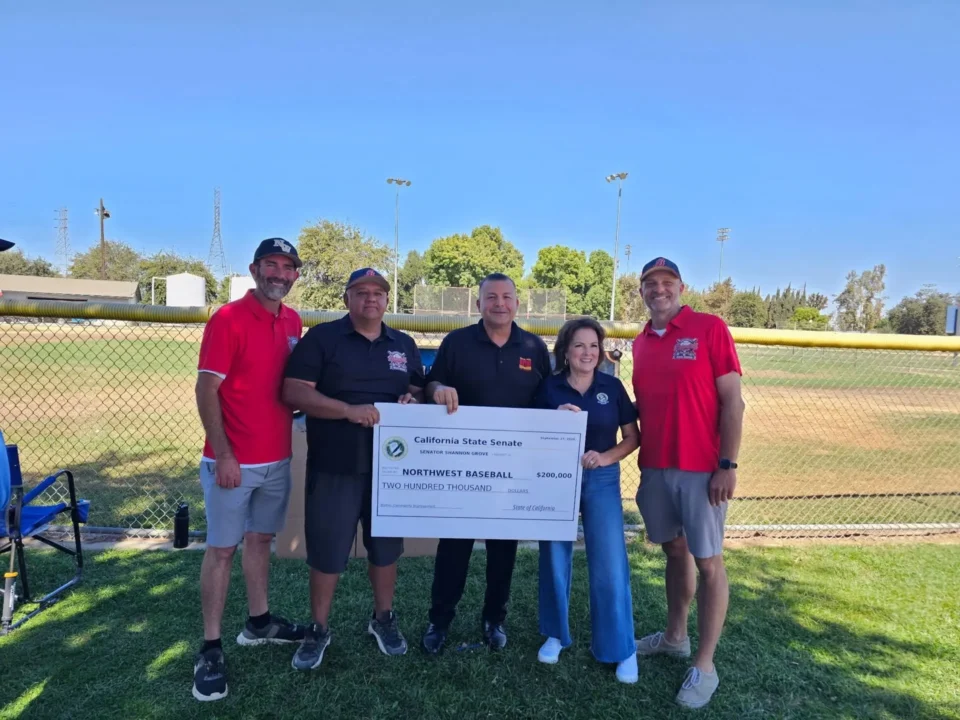
Born and raised in Kern County, Grove served in the U.S. Army after high school. After leaving the Army, she and her sister-in-law founded Continental Labor and Staffing Resources. In 2010, Grove was elected to the state Assembly. In 2018, she was elected to the state Senate. In 2019, her Republican colleagues elected her Senate Republican Leader, a post she held until 2021. Term limits prevent her from running for reelection. As a board member, Grove promises to work “to ensure fairness, transparency and accountability in California’s tax system.”
Nelson grew up in Madera. He earned a bachelor’s degree in economics from UC Riverside and a master’s degree in public policy from UCLA. He was elected to the Fresno County Board of Education in 2016 and to the Fresno City Council in 2018, where he chaired the Finance and Audit Committee. While serving on the council, he operated a political consulting business and taught economics part time at Fresno City College. Like Grove, he is term-limited and cannot run for reelection to the council. Nelson Esparza says he is “running for the Board of Equalization to protect the people of California, our values and our tax dollars, so that our state can invest in our people, from education to healthcare, public safety to economic development, and more.”
The Board of Equalization will be best served by a member with extensive life experiences and knowledge of California, its people and businesses, and the workings of state government. Elect Shannon Grove.
Candidate websites:
•••
Richard Barrera
SUPERINTENDENT PUBLIC INSTRUCTION
The California Superintendent of Public Instruction is a nonpartisan elected office. Until Gov. Gavin Newsom signed a reorganization bill into law in July, the job had considerable responsibilities and authority. But no longer.
Richard Barrera and Sonja Shaw, the top vote-getters in the June primary, are competing for an elective office that is different from the one they originally sought.
Barrera was born and raised in San Diego. He earned a bachelor’s degree in history from UC San Diego and a master’s degree in public policy from Harvard University. In 2008, he was elected to the San Diego Unified School District Board. He currently is board president. Earlier, he worked as a labor and community organizer. Since 2024, he has been a senior adviser to current state Superintendent of Public Instruction Tony Thurmond.
Born and raised in Chino, Sonya Shaw operated two small businesses — fitness/health and photography — and held a real estate license before entering politics. The mother of two school-aged daughters, Shaw was elected to the Chino Valley Unified School District Board in 2022. She soon captured national headlines with her battles with the Newsom administration and Thurmond over parental rights, transgender students, curriculum and the books she believes should not be in school libraries.
Reorganization that gutted the superintendent of public instruction’s position was a long overdue response to a confusing state system that included an Education Department headed by an elected superintendent, but a State Board of Education appointed by the governor. This has been replaced by an education commissioner appointed by the governor to oversee day-to-day operation of the state Education Department. While Board of Education members continue to be appointed by the governor, the Legislature will now appoint two addition members and the state superintendent of public instruction will be a voting member.
The elected state superintendent of public instruction is left with a small staff and vague assurances that he or she will somehow have a stronger formal role coordinating education policy. The state’s legislative analyst has urged the Legislature to better define the superintendent’s new responsibilities.
Voters can help with that. They can elect a superintendent of public instruction who has long experience helping run a large local school district, such as San Diego’s, and who has an existing working relationship with the state Department of Education. They can and should elect Richard Barrera.
Candidate websites:
This article originally appeared in The Bakersfield Californian: https://www.bakersfield.com/opinion/our-view/our-view-governor-others-will-determine-state-s-fate-voters-will-elect-california-s-nine/article_5b1e3e51-3f31-4081-b348-2c1e7b551ad6.html